Thursday, July 24, 2014

John D'Emilio: A Voice from the Stonewall Generation


“Think about what happens when gay means white. It makes gay a form of wealth and privilege.”


 John D’Emilio, in his latest book, In a New Century: Essays on Queer History, Politics, and Community Life, is more critical, reflective, provocative, and personal than his previous work. He passionately points to the limitations and unintended consequences of the LGBT movement – as illustrated in the above quote. The claims of rights and the fight for acceptance has consolidated  the whiteness of being LGBT by ignoring the profound inequalities based on social class and race and neglecting the diversity of expression of same sex love and desire within and outside LGBT communities. 


In one of the best executed and most passionate essays in this collection, he makes a solid argument against same-sex marriage. “Marriage simply confirms and extends [middle and upper classes] already privileged status,” D’Emilio concludes. He brings history, demography, politics, and economics to make his case. His voice is deeply personal, scholarly, and persuasive. I, a married and a father gay man, am on this side of the argument. Marriage does not open up possibilities for all of us to pursue justice, happiness, and well-being, rather, it reduces them. To be clear, I married the love of my life, but the institution of marriage has little or nothing to do with our love.


D’Emilio also critically reflects on the history and story we, LGBT scholars, have created and told. The work we have produced around the lives of LGBT folks, he proposes, has remained outside the large history of the US. While perhaps that was needed in the 1960s and 1970s, we now need to bring in the national (and, I would argue, transnational) forces that have shaped the LGBT movement: “If we embed queer stories in a larger political economy, a larger national political history, they will become lees separated and less self-ghettoized, and instead become seen as integral to, more connected to, and more essential for understanding broader narratives of US history.”


In A New Century, I discovered D’Emilio’s trajectory as a scholar and as a gay person-- both of which are entangled. His writing is personal and insightful. As an academic and gay person myself, I found in this book an inspiring colleague, mentor, and leader. Students of history will see the inner and behind-the-scenes work of a historian.


I was surprised to read much of what D’Emilio writes about as “history.” The moments that once were beyond my imagination and those in which I was living have become history: AIDS and same-sex marriage. I was reminded of the marvelous potential meaning of our present. Our daily lives, work and queerness in the world and in our communities, in the center and in the margins, all becomes part of history, our history.

Friday, June 27, 2014

The AIDS Generation


“I think oh thank God, there’s other people who are there, who saw it, who know it, who lived through because we are few and between.” (Kerry, p. 121).

Mr. Kerry is one of the participants interviewed for The AIDS Generation: Stories of Survival and Resilience, by Perry N. Halkitis (Oxford University Press, 2014). I enjoyed reading it and recommend it to those of you interested in AIDS, gay men's health, gerontology, psychology, and social work. You can read my full review published by AIDS Education and Prevention.


Saturday, May 31, 2014

Beyond LGBT Rights


While I welcome the recent US Supreme Court decision granting the right to marriage to same-sex couples, I think we must look beyond rights and focus on the material living conditions of queer people – especially our elders. Author and activist Sherry Wolf makes an eloquent argument in this 3 min. video for The Nation. Take a look. 


Sherry Talks Back is her blog where she talks about sexuality, liberation, and revolution. A good read for those of us seeking an alternative society.

Friday, May 3, 2013

An Oldie: Beauty before Age


In my search for media representations of old gay men, I stumbled upon Beauty before Age (1997, J. Symons, producer), a short documentary on gay men’s anxieties about old age. I had forgotten that I had seen it back in the late 1990s, when it came out, and that my dear friend and colleague, Rafael Diaz, was featured in the film. 


This is a pioneer piece, as significant discussions about old age rarely took place in gay culture until the mid 2000s. Credit to Mr. Symons for touching on the salient themes around growing old and being gay: the negative stereotypes, the cult of youth and muscular physique, the (exceptional) ageless love, the aging we faced during the peak of the AIDS epidemic, and the active participation of gay men, young and old, in maintaining the invisibility of the old.


More precisely, the film is about aging in the Castro. And as I watched it (this time), I wondered if, and how, this phenomenon is an artifact of capitalism. Youth is a product, a commodity, an attribute that is sold and bought. Sexual attractiveness and performance and musculature go along with youth and they are marketed, sold, and consumed. But I’m thinking that the work of capitalism goes further: youth, as a commodity, gives as a sense of being. It makes us believe that we are powerful, attractive, productive, healthy, and strong. It provides the illusion of a full and purposeful life in the midst of the alienation and hollowness of contemporary capitalism. 

I’m referring to youth as manifested in our contemporary and dominant white gay culture, not to a “universal” sense of youth. There are, of course, alternative ways of being young and queer, but they are not visible. And even then I wonder if any of those choices escape the rejection of old age.

Wednesday, November 14, 2012

New Housing Development for Chicago LGBT Seniors

The first affordable housing for LGBT seniors in Chicago is expected to open in 2014 -- just in two years! This is a photo of the latest design, courtesy of Curbed.

The development is located in Lakewiew, adjacent to the Center on Halsted and it follows the already existing Triangle Square in Hollywood and a new planned building in Philadelphia. The concept is to provide an LGBT-friendly environment for those with limited income and in combination with social services. More to come as the details are worked out.


For more information see the piece Housing the Invisible @ The Atlantic Cities.


Sunday, March 18, 2012

How to Survive the Plague

How to Survive the Plague is a new film documentary about the early years of the HIV/AIDS epidemic in the US and the mobilization of gay men, and their allies. As it should be, it focuses on the activism of ACT UP -- the AIDS Coalition to Unleash Power. Gay men of the Baby Boomer Generation were the most impacted by the epidemic. Between the years of 1987 and 1995, at the height of the epidemic, they suffered the highest mortality rates. They were dying in proportions only seeing in times of war. The survivors were left in great pain and alone, once more in their lives as gay people.
Frank Bruni, of The New York Times, provides a preview of this movie in his article The AIDS Warriors' Legacy

Friday, December 30, 2011

Older Gay People in the UK: Likely to be Alone


Campaigners warn of looming care problem as Stonewall survey predicts health and housing crisis

Jamie Doward
The Observer
, Saturday 10 September 2011

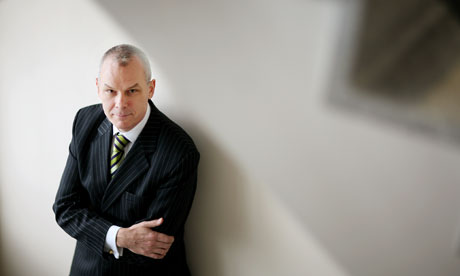
ben summerskill
Ben Summerskill: 'Thousands of gay people are growing older without the same family and support structures that many straight people enjoy.' Photograph: Graeme Robertson for the Guardian
 
Gay men and women in Britain are far more likely to end up living alone and have less contact with family in later life than heterosexual people, according to a groundbreaking report that raises significant questions for how society responds to their needs.

The report, the first of its kind, has implications for GPs, health and social services at a time when Britain's population is ageing. It is estimated that there are a million lesbian, gay and bisexual people in Britain over the age of 55.

A YouGov survey, commissioned by the campaign group Stonewall, found that older gay and bisexual men are three times more likely to be single than heterosexual men.
Just over a quarter of gay and bisexual men and half of lesbian and bisexual women have children compared with almost nine in every 10 heterosexual men and women. They were also less likely to see biological family members regularly. Less than a quarter of LGB people see their biological family members at least once a week, compared with more than half of heterosexual people according to the survey of 1,050 heterosexual and 1,036 LGB people over the age of 55.

"This pioneering research confirms what we already knew intuitively, that there are hundreds of thousands of lesbian and gay people growing older without the same family and support structures that many straight people enjoy," said Ben Summerskill, chief executive of Stonewall. "Quite often, that's because their own families have disowned them just because of the way they were born."

The prospect of impending loneliness is a recurring theme among those interviewed for the report. "As a single gay man, I feel sad about my prospects of finding emotional comfort and support," Michael, 60, told interviewers.

Paul, 59, said: "My gayness makes me less connected to my biological family who would otherwise look out for me."

The prospects of a solitary old age may be one explanation for why the survey suggests LGB people are consistently more anxious about growing older than heterosexual people.

With diminished support networks compared to their heterosexual peers, they are more likely to rely on formal support services as they get older. Stonewall's report found they were nearly twice as likely to rely on external services such as GPs and social services as heterosexual people. But many worried that the services would not meet their needs. Three in five are not confident that support services will meet their needs.

Some 72% of LGB people said they were worried about the prospect of needing care later in life, compared with 62% of heterosexual people. Half said they were worried about housing compared with 39% of heterosexual people while 69% were worried about their health compared with 59% of heterosexual people.

Frank, 64, said: "I worry about my partner becoming ill or dying, and about leaving him alone if I die first." James, 55, said: "Being gay and getting older is like not being gay and getting older but difficulties are magnified."

Their fears are compounded by their lifestyles. Gay people are far more likely to drink alcohol regularly, take drugs and have a history of mental health problems than heterosexual people.
But despite these concerns many would feel uncomfortable about revealing their sexuality to those who work in the public health and support sector. Nearly half said they would be uncomfortable about coming out to care home staff and a third would be uncomfortable coming out to a housing provider or a paid carer.

"For the first time this generation of ageing gay people fully expects to be treated with respect by both public and commercial service providers," Summerskill said. "They want to be able to share a room in an old people's home or to be supported through their partner's terminal illness just like anyone else."
Summerskill expressed concern that Britain's care system failed to recognise that not all couples were the same. "We're facing a care time bomb of institutional ignorance about what a community that makes a £40bn a year contribution to public services will soon – quite properly – be demanding."

AGEING DIFFERENCES

■ 40% of gay and bisexual men over 55 are single, compared with 15% of heterosexual men.
41% of lesbian, gay and bisexual people over 55 live alone compared with 28% of heterosexual people.
■ 8% of lesbian, gay and bisexual people over 55 see members of their family a few times a week compared with 21% of heterosexual people.
15% of lesbian, gay and bisexual people over 70 work compared with 6% of heterosexual people.
■ 9% of lesbian, gay and bisexual people over 55 have taken drugs within the last year, compared with 2% of heterosexual people.
 
© 2011 Guardian News and Media Limited or its affiliated companies. All rights reserved.